What is Columbus Airport like? | John Glenn Columbus International Airport (CMH)

What is Columbus Airport like? John Glenn Columbus International Airport, known by its code CMH, is the main commercial airport serving Columbus, Ohio, and one of the most important passenger airports in the state.
CMH is not always the first airport people think of when talking about major U.S. air travel, but its recent growth tells a stronger story. In 2025, John Glenn Columbus International Airport ranked among the top five airports for flight growth in the United States among the 50 busiest airports.
That detail makes CMH more interesting than it may seem at first. It is not just an airport serving Ohio’s capital city. It is an airport growing with Columbus, adding more relevance to the region’s travel, business, and aviation footprint.
In 2025, more than 9 million passengers passed through John Glenn Columbus International Airport, showing how important CMH has become for travelers in central Ohio.
Columbus Airport (CMH): the main airport serving Columbus, Ohio
Columbus Airport, officially named John Glenn Columbus International Airport, is the primary passenger airport for Columbus, Ohio.
For travelers in central Ohio, CMH is the airport most closely connected to everyday travel: business trips, vacations, family visits, college travel, and flights to major cities across the United States.
Its location also matters. CMH sits just east of downtown Columbus, making it a practical gateway for the city and surrounding communities.
What makes the airport interesting is the balance between size and usefulness. CMH is not a massive hub, but it handles millions of passengers, connects Columbus to key destinations, and continues to grow as the city becomes more important nationally.
John Glenn Columbus International Airport and its role in central Ohio
John Glenn Columbus International Airport is operated by the Columbus Regional Airport Authority, which manages multiple airports in the region.
Within that system, CMH is the main passenger airport. That gives it a different role from nearby airports that focus more heavily on cargo or general aviation.
For Columbus, CMH is more than a transportation facility. It supports the movement of residents, visitors, workers, students, and businesses. As the city grows, the airport becomes a clearer reflection of that growth.
That is why John Glenn Columbus International Airport has a story beyond its code. CMH helps connect Columbus to the rest of the country while giving central Ohio a stronger presence in the national air travel network.
CMH airport runways, terminal, and gates
CMH operates with 2 runways. One runway is 8,000 feet long, and the other is 10,113 feet long.
The airport also has one main passenger terminal with more than 30 passenger gates. This gives CMH enough infrastructure to support a strong passenger operation while still feeling more manageable than many of the largest airports in the United States.
That balance is part of the airport’s appeal. For many travelers, Columbus Airport can feel easier to navigate than a major hub, but the numbers show that it still plays a serious role in regional air travel.
CMH does not need to be overwhelming to be important. Its infrastructure supports millions of passengers, domestic and international service, and a growing route network from Ohio’s capital city.
Columbus Airport passenger traffic and 2025 flight growth
In 2025, John Glenn Columbus International Airport recorded more than 9 million passengers.
That number is important because it shows that CMH is not just a steady regional airport. It is a growing passenger airport serving a city that continues to gain momentum.
The stronger aviation story is its flight growth. In 2025, CMH ranked among the top five airports for flight growth in the United States when compared with the 50 busiest airports.
That kind of growth says something about Columbus. More flights usually mean more demand, more travel activity, and more opportunities for airlines to connect the city with other markets.
For travelers, that can translate into better access. For the city, it reinforces the role of the airport as part of Columbus’ broader growth story.
Airlines and nonstop destinations from CMH
Columbus Airport connects travelers to a wide range of nonstop destinations across the United States.
Airlines serving CMH include carriers such as American Airlines, Delta Air Lines, Southwest Airlines, United Airlines, Air Canada, Alaska Airlines, Breeze Airways, Frontier Airlines, and Sun Country.
The Columbus airport system has listed more than 50 nonstop destinations, with CMH serving as the main passenger airport for the region.
For travelers, this means CMH offers access to major business cities, leisure destinations, airline hubs, and important regional markets. It may not be one of the largest hubs in the country, but it gives Columbus a strong level of connectivity.
International routes from John Glenn Columbus International Airport
John Glenn Columbus International Airport is not only a domestic airport. CMH also connects travelers to international destinations.
International service from Columbus has included destinations in Canada and Mexico, giving travelers access beyond the United States without needing to start every international trip through a larger hub.
That matters because international routes help make an airport feel more connected to the wider travel network. For a city like Columbus, those routes add another layer to CMH’s importance.
Even if most flights from CMH are domestic, its international service helps position Columbus Airport as a more complete gateway for the region.
Why CMH is becoming more important for Columbus
The story of CMH is really connected to the story of Columbus itself.
Airports grow when the cities around them create demand. More residents, more businesses, more events, more universities, and more visitors can all increase the need for flights.
That is why the 2025 flight growth number matters. It shows that John Glenn Columbus International Airport is not just maintaining its role. It is becoming more active within the national air travel landscape.
CMH does not need to compete with the biggest hubs to be relevant. Its importance comes from how it serves Columbus, how it connects central Ohio, and how it reflects the growth of the region.
The CMH airport pin inspired by John Glenn Columbus International Airport
After understanding what John Glenn Columbus International Airport represents for Columbus, the CMH airport pin has more meaning.
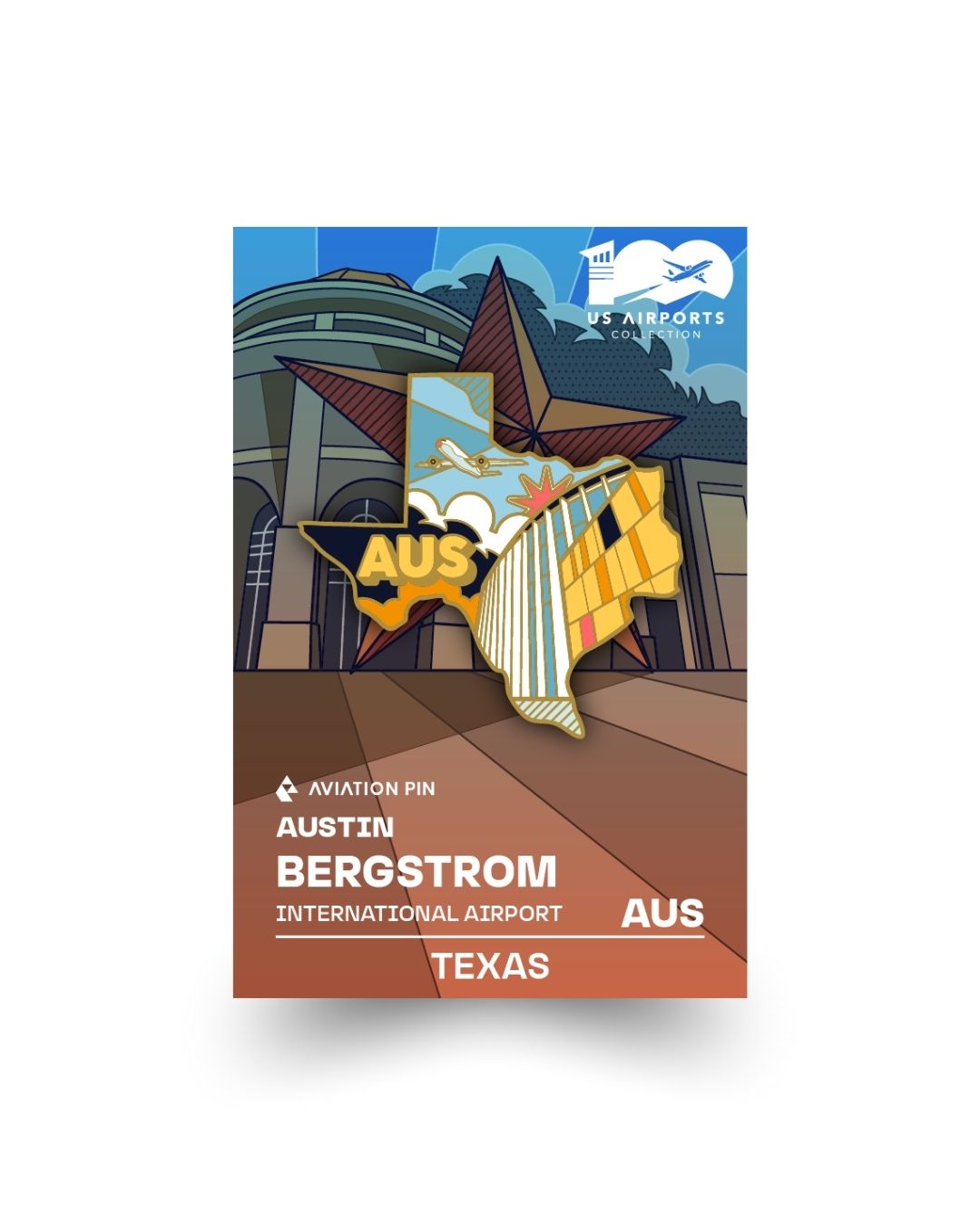
We created this airport pin inspired by John Glenn Columbus International Airport, known by its code CMH. The design is shaped like the state of Ohio, includes the airport’s control tower, and features the CMH code as part of the design.
You can use it as a pin or as a magnet thanks to its magnetic pin backs.
It is a small piece made for people who have a real connection to Columbus, Ohio, or this airport.

A meaningful piece for anyone connected to Columbus Airport
Some airports are more than places where a trip begins or ends.
For many people, an airport can represent a city, a job, a move, a family visit, a vacation, or a chapter of life.
That is what gives airport codes meaning. CMH is not just three letters. For someone connected to Columbus, it can represent home, work, travel, or a memory tied to Ohio’s capital city.
If Columbus is part of your story, if you have traveled through this city, or if you work at this airport, this pin is for you.
See the CMH airport pin at Aviation Pin.
FAQs about Columbus Airport
What is the airport code for John Glenn Columbus International Airport?
The airport code for John Glenn Columbus International Airport is CMH.
Where is Columbus Airport located?
Columbus Airport, officially John Glenn Columbus International Airport, is located in Columbus, Ohio, just east of downtown Columbus.
Is CMH the main airport in Columbus, Ohio?
Yes. CMH is the main commercial passenger airport serving Columbus, Ohio.
How many runways does CMH have?
CMH operates with 2 runways.
How many gates does John Glenn Columbus International Airport have?
John Glenn Columbus International Airport has more than 30 passenger gates.
How many passengers used CMH in 2025?
In 2025, more than 9 million passengers passed through John Glenn Columbus International Airport.
Which airlines fly from Columbus Airport?
Airlines serving Columbus Airport include American Airlines, Delta Air Lines, Southwest Airlines, United Airlines, Air Canada, Alaska Airlines, Breeze Airways, Frontier Airlines, and Sun Country.
Does CMH have international flights?
Yes. John Glenn Columbus International Airport has international service, including routes connected to Canada and Mexico.
What makes Columbus Airport special?
Columbus Airport stands out because CMH ranked among the top five airports for flight growth in the United States in 2025 among the 50 busiest airports, while also serving more than 9 million passengers that year.