What is Boston Logan Airport (BOS) like?

Boston Logan International Airport (BOS) is one of the most important airports in the northeastern United States and consistently ranks within the top 20 busiest airports in the country by passenger traffic. In recent years, it has experienced steady growth, strengthening its role as a key airport for high-frequency domestic flights and international operations, particularly in the transatlantic market.
Located just minutes from downtown Boston, BOS combines a compact footprint with a high-density operation. Its coastal location and limited physical space require a highly optimized approach to air traffic management and passenger flow, making operational efficiency one of its defining characteristics.
Boston Logan Airport (BOS) – Key facts
- IATA code: BOS
- Operated by the Massachusetts Port Authority (Massport)
- 4 passenger terminals: A, B, C, and E
- 6 active runways
- Longest runway: 15R/33L – 10,083 ft
- More than 40 airlines operating
- More than 100 nonstop destinations
- Busiest airport in the state of Massachusetts
- National ranking: consistently within the top 20 airports in the United States by passenger volume
Runways and air operations at Boston Logan Airport (BOS)
Boston Logan operates six runways with different lengths and orientations, allowing the airport to adapt to variable weather conditions common along the Massachusetts coast, including crosswinds, fog, and rapidly changing weather patterns.
This runway configuration supports operations for regional aircraft, high-rotation narrow-body jets, and wide-body aircraft serving international and transatlantic routes.
Despite being surrounded by water and constrained by limited space, BOS sustains a high volume of daily operations thanks to efficient runway utilization and precise air traffic control procedures.
Longest runway at Boston Logan Airport
Runway 15R/33L, at 10,083 ft, is the longest runway at Boston Logan and plays a critical role in airport operations.
This runway supports wide-body departures at higher takeoff weights, long-haul transatlantic operations, and provides additional operational margins during challenging weather conditions.
A significant portion of BOS’s international traffic depends on this runway to maintain both efficiency and safety.
Boston Logan Airport terminals – Complete breakdown
Boston Logan operates four active passenger terminals, each with a clearly defined operational role.
Terminal A – Delta operations
Terminal A is used primarily by Delta Air Lines. It handles domestic flights and select international services. It is one of the airport’s most modern terminals and is designed for fast, efficient passenger flows.
Terminal B – High-volume domestic operations
Terminal B is one of the airport’s busiest terminals by traffic volume. It is used by multiple airlines, including American Airlines, United, Southwest, Alaska, Spirit, and others. Its layout supports flexible operations and high aircraft turnover throughout the day.
Terminal C – JetBlue’s main base
Terminal C serves as JetBlue’s primary base in Boston and is one of the most active areas of the airport. It handles a high volume of domestic flights along with select international routes, operating at a consistently high tempo.
Terminal E – International terminal
Terminal E is Boston Logan’s international terminal. It is equipped to handle long-haul flights and wide-body aircraft, concentrating services to Europe, the Middle East, and other international markets, along with customs and immigration processing.
Why is there no Terminal D at Boston Logan (BOS)?
Boston Logan does not have an operational Terminal D. The letter D was intentionally omitted from the airport’s terminal scheme and was never assigned as a standalone passenger terminal.
When the current terminal layout was consolidated, airport planners chose to maintain clearly differentiated terminal functions and reserve Terminal E for international operations. As a result, BOS transitioned directly from Terminal C to Terminal E.
There was no terminal removed or renamed. Terminal D simply never existed as part of the official operational design.
Connectivity and airlines at Boston Logan Airport (BOS)
Boston Logan offers strong domestic and international connectivity.
The airport serves more than 100 nonstop destinations, with high-frequency service across the East Coast, Midwest, and West Coast, as well as a robust transatlantic network to Europe and international service to the Middle East, the Caribbean, and Latin America.
JetBlue maintains one of its largest operations at BOS, while Delta uses the airport as a secondary hub for transatlantic flights, reinforcing its strategic role within the U.S. airline network.
Ground access and surface transportation at Boston Logan Airport
One of Boston Logan’s key advantages is its direct ground access.
The MBTA Silver Line (SL1) connects the airport with downtown Boston and operates free of charge for arriving passengers. This is complemented by Logan Express bus services, central parking facilities with direct terminal access, and fast connections via urban tunnels and major roadways.
This makes BOS one of the closest large airports to its downtown area in the United States.
Why is Boston Logan Airport (BOS) a key airport?
Boston Logan stands out for its ability to operate efficiently in a complex environment.
It handles a high passenger density within a limited footprint, relies on optimized infrastructure rather than expansive growth, operates under demanding weather conditions, and maintains a strong presence of major airlines.
Its international connectivity, particularly across the Atlantic, reinforces BOS’s role as a critical gateway within the U.S. aviation system.
BOS Airport Pin – A tribute to Boston aviation
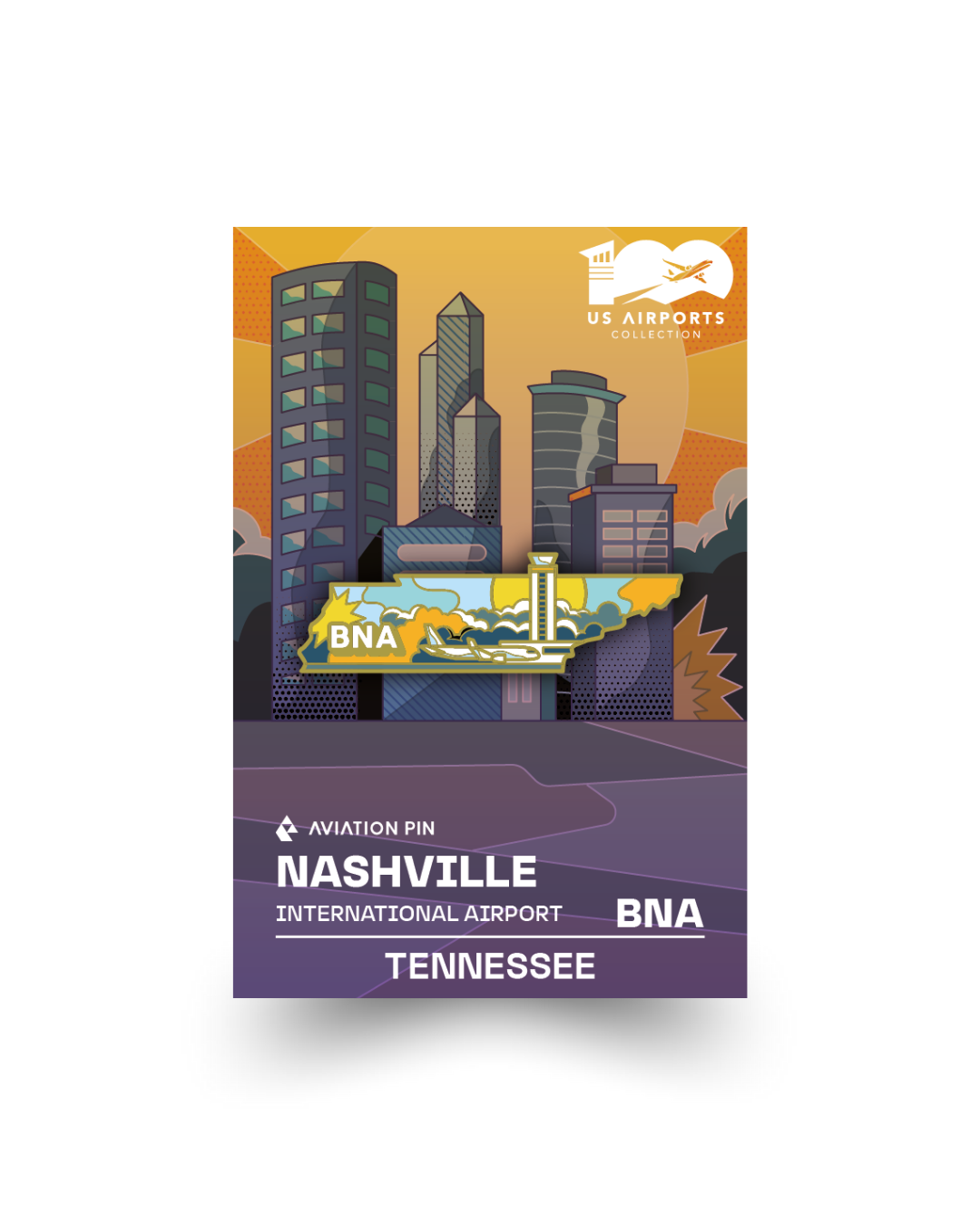
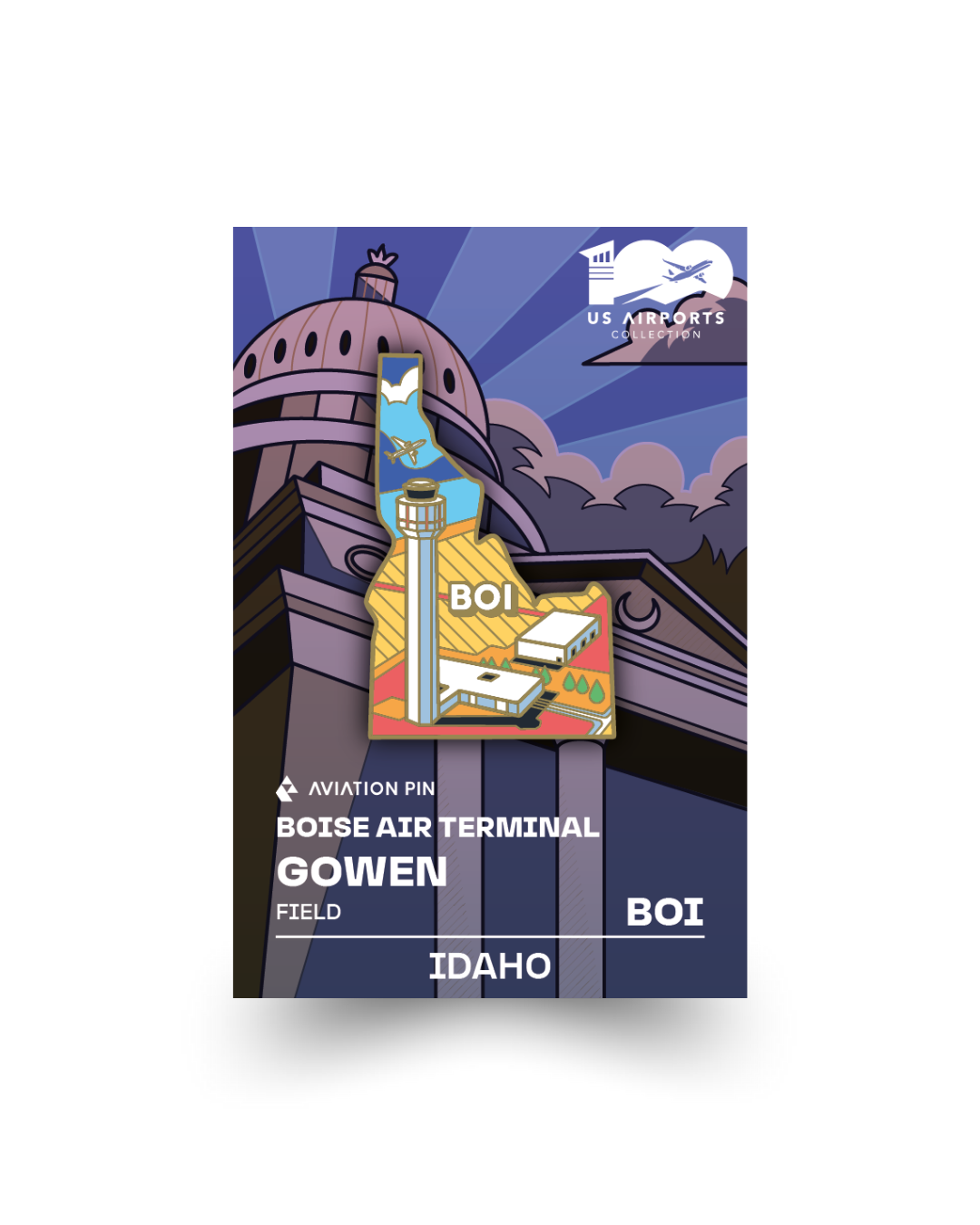
The Boston Logan Airport Pin (BOS) pays tribute to one of the most active and strategically important airports in the northeastern United States. Made in hard enamel, sized at 1.5 inches, with a premium finish and dual function (pin + magnet), it represents the constant movement and operational efficiency that define BOS.
What’s included with the BOS Airport Pin
- Illustrated backing card dedicated to BOS
- Rubber clutch and magnetic safety lock
- Dual function: pin or magnet
- Premium packaging, ideal for collection or display
Boston Logan International Airport (BOS) appears constantly in domestic itineraries, transatlantic routes, and key connections across the United States.
It is an airport that does not need to be the largest to be relevant.
If BOS is part of your travel story, this is your pin.
BOS Airport Pin – Boston Logan International Airport, Massachusetts
100 US Airports Collection