What is Dayton Airport like? | James M. Cox Dayton International Airport (DAY)

What is Dayton Airport like? James M. Cox Dayton International Airport, known by its airport code DAY, is the commercial airport serving Dayton, Ohio. Located north of the city, it stands out for a detail many travelers may not expect: it is the largest commercial airport by land area in all of Ohio.
That size is an important part of its story. The airport covers more than 4,500 acres and has three runways, including a main runway that measures 10,901 feet. For an airport many people may think of as regional or quieter than Ohio’s larger passenger airports, that infrastructure makes DAY more interesting than it may seem at first.
Dayton Airport location
James M. Cox Dayton International Airport is located north of Dayton, Ohio. Official airport information places it about 9 miles north of the city, making it an important air gateway for the Dayton area and southwest Ohio.
The airport is owned by the City of Dayton and operates as a public commercial airport. Its location also fits naturally into the city’s identity: Dayton is not just a city with an airport. It is a city deeply connected to the history of aviation in the United States.
That local connection is part of what gives DAY meaning for travelers, airport employees, and people who connect Dayton with work, family, travel, or aviation history.
Infrastructure at James M. Cox Dayton International Airport
DAY has more than 4,500 acres of land, three runways, one main terminal, two concourses, and 17 active gates. Its main runway, 6L/24R, is 10,901 feet long, while the other two runways measure 8,502 feet and 7,285 feet.
The airport also has a main terminal connected to Concourse A and Concourse B. This layout keeps the commercial passenger experience more concentrated, without splitting the airport into multiple large terminals.
What makes DAY interesting is not just that it has three runways or one main terminal. It is the combination: a large amount of land, a long main runway, and an operation that does not feel as massive as some of Ohio’s more widely recognized airports.
Passengers and aircraft operations at DAY
In 2025, Dayton International Airport reported 657,005 passenger enplanements. For a general audience, that equals more than 1.3 million total passengers when departures and arrivals are considered as an approximate combined figure. That same year, the airport recorded 37,614 total aircraft operations.
The FAA also lists James M. Cox Dayton International Airport as a primary commercial service airport and a small hub in its preliminary 2025 enplanement data. In that preliminary table, DAY appears with 637,571 enplanements, a slightly different figure from the airport’s official monthly statistics. For this article, the airport’s own 2025 report is used as the main reference for the annual passenger figure.
These numbers help explain DAY more clearly. It is not the busiest airport in Ohio by passenger traffic, but it does have a very large physical footprint for the traffic it handles today. That contrast is exactly what makes it a more interesting airport story.
Nonstop destinations from Dayton Airport
According to DAY’s official statistics page, Dayton International Airport connects travelers to 16 nonstop destinations. That network allows the airport to serve as a practical option for people in the Dayton area who want access to flights within the United States without necessarily driving to a larger airport.
Although DAY does not have the scale of airports like Cleveland Hopkins or John Glenn Columbus, its value is regional convenience. For many travelers, an airport that is easier to navigate can be an important part of the travel experience, especially when the trip starts or ends in Dayton.
There is also a sense of identity attached to the airport. For people who live in the area, work at the airport, or have used DAY for years, this is not just a departure point. It is part of how Dayton connects with the rest of the country.
What makes Dayton Airport special
What makes James M. Cox Dayton International Airport special is the mix of scale, history, and local identity.
On one hand, DAY has more than 4,500 acres, three runways, and a main runway that is nearly 11,000 feet long. On the other hand, it is not the busiest airport in the state. That difference between physical size and public perception creates a more compelling story than a simple list of airport facts.
The airport also has a strong historical connection to Dayton. In the airport’s official history, Dayton Municipal Airport became the largest commercial airport in Ohio in 1947, after the federal government transferred land and facilities to the city.
That history helps explain why DAY should not be seen as just another regional airport. It is an airport with a large footprint, a city with a deep aviation identity, and an operation that continues to be part of everyday life for many people in Dayton.
The airport pin inspired by DAY
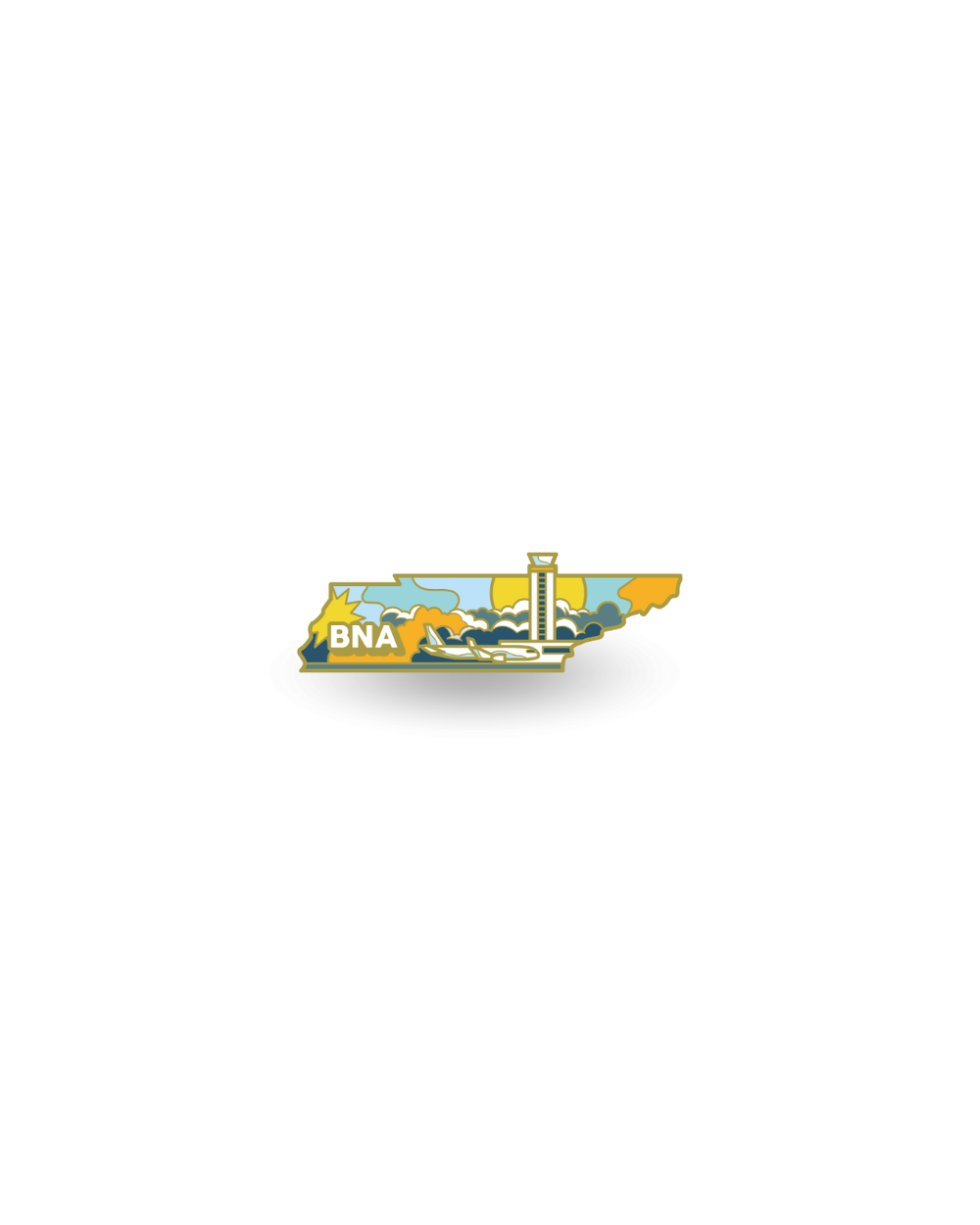
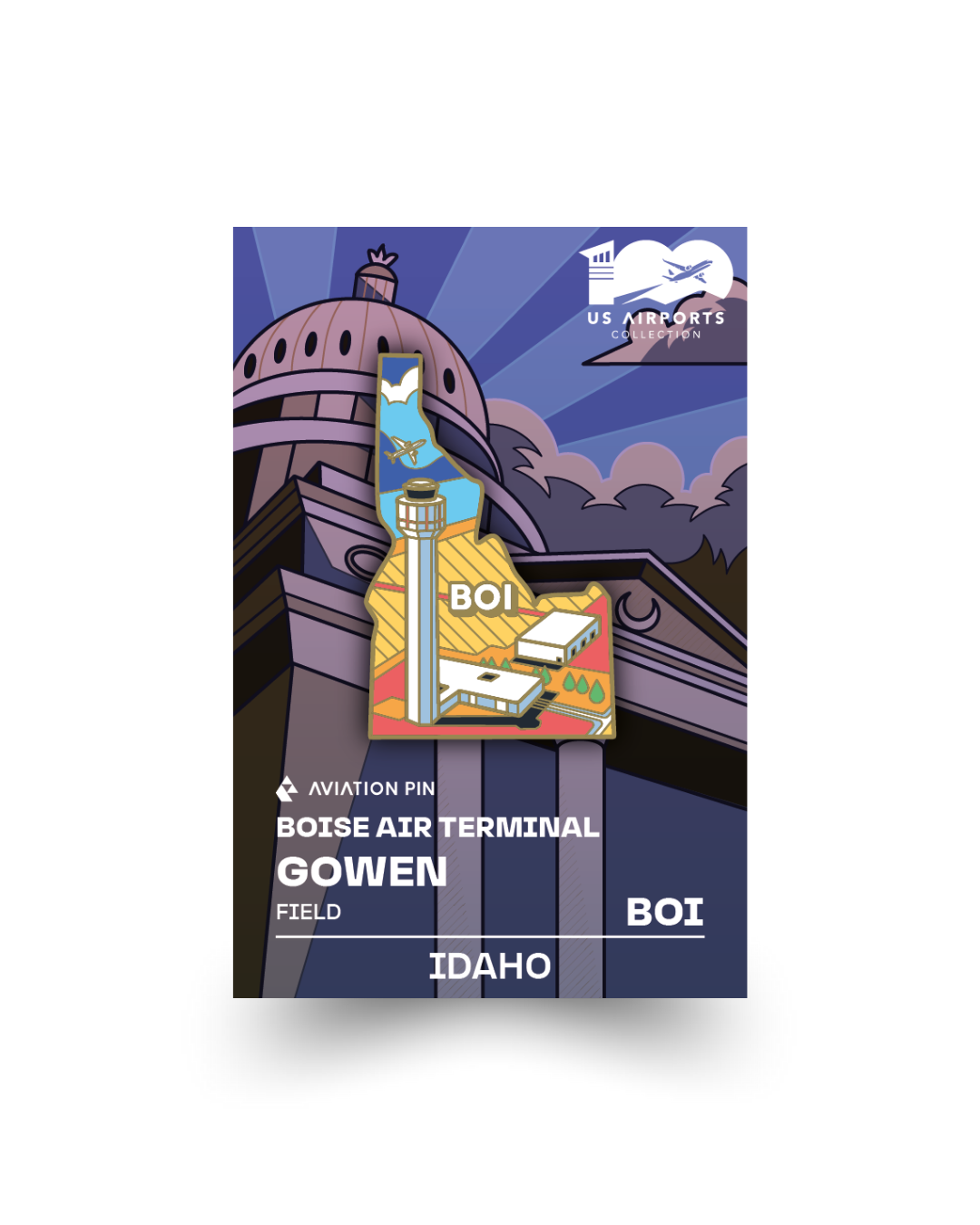
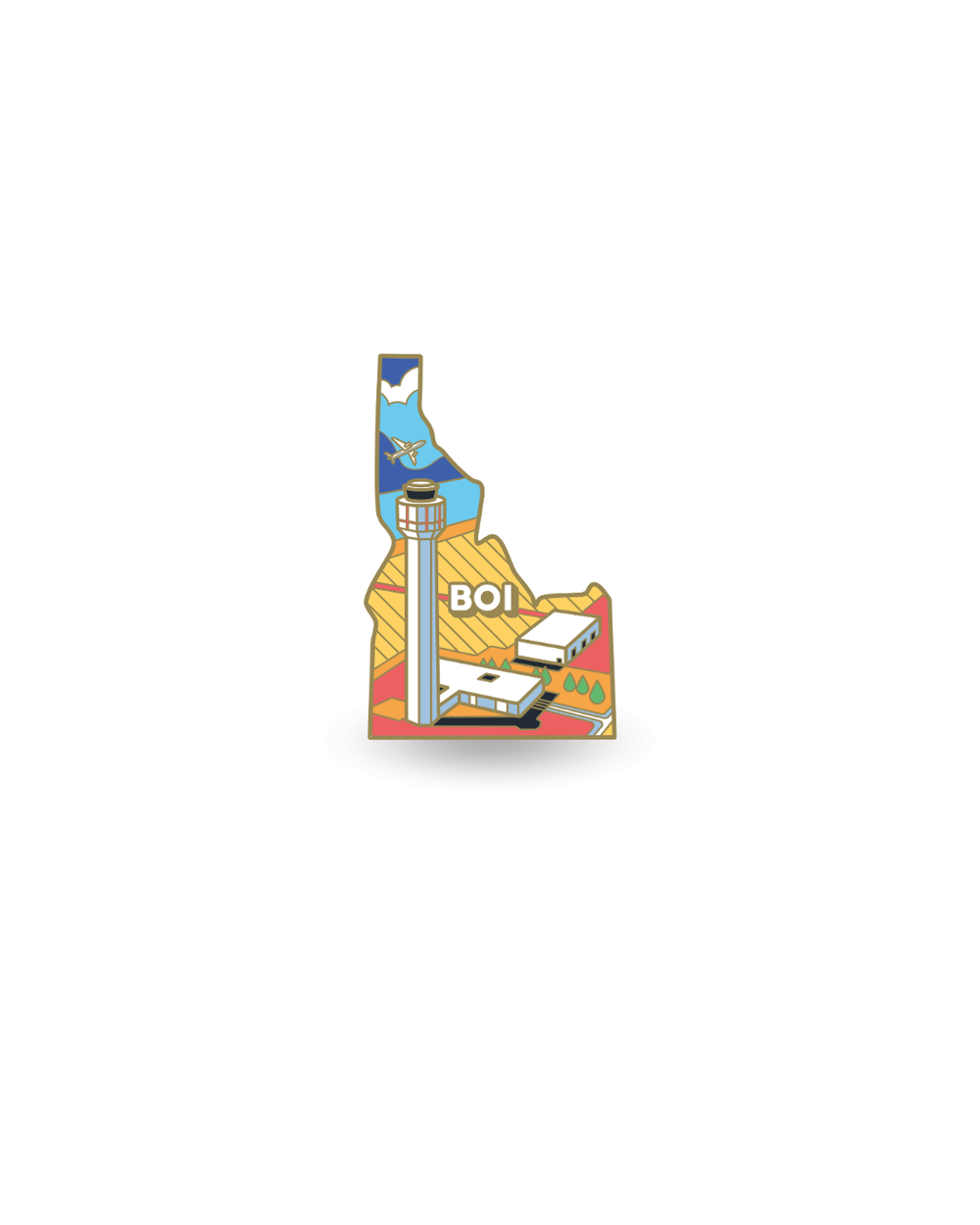
After looking at what James M. Cox Dayton International Airport represents, we created an airport pin inspired by DAY.
The design takes the shape of the state of Ohio, integrates the airport’s control tower, and features the DAY code as part of the piece. The idea is not to represent the airport as a technical fact, but as a place many people recognize through personal experience: travel, work, family, moving away, coming home, or memories tied to Dayton.
This pin can be used as a pin or as a magnet thanks to its magnetic pin backs included. It is a piece created for people who feel a real connection to Dayton International Airport, whether they traveled through it, work there, or have a personal story connected to this place.

A piece for people with a Dayton story
Airports are not always remembered only for their runways, terminals, or routes. Sometimes they are remembered because they marked the beginning of a trip, the return home, the place where someone worked for years, or the airport a family used again and again.
DAY has that kind of meaning for many people. It represents Dayton, Ohio, but it also represents individual stories: frequent travelers, employees, locals, students, military families, and people who connect this airport with a chapter of their lives.
If you’ve traveled through Dayton, work at this airport, or have a special connection to this place, this pin is for you.
See the pin inspired by DAY here:
https://aviationpin.com/products/day-airport-pin-james-m-cox-dayton-international-airport
FAQs
What is the IATA code for Dayton Airport?
The IATA code for James M. Cox Dayton International Airport is DAY.
Where is James M. Cox Dayton International Airport located?
The airport is located north of Dayton, Ohio. Official airport information places it about 9 miles north of the city.
How many runways does Dayton Airport have?
DAY has three runways. Its main runway is 10,901 feet long.
How many passengers does Dayton Airport handle?
In 2025, the airport reported 657,005 passenger enplanements, which equals more than 1.3 million total passengers when departures and arrivals are considered as an approximate combined figure.
What makes Dayton Airport special?
DAY stands out because it is the largest commercial airport by land area in Ohio, with more than 4,500 acres, three runways, and a strong connection to Dayton’s aviation history.